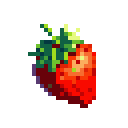
The intersection of generative AI and pixel art presents a unique mathematical and visual challenge. While modern diffusion models excel at producing high-resolution, continuous-tone imagery, they fundamentally misunderstand the rigid constraints of traditional sprite work.
Standard AI models do not produce pixel art; they produce "pixel-flavored" art. They introduce anti-aliasing, continuous gradients, and misaligned grids, resulting in blurry, unusable images that require hours of manual cleanup before they can be dropped into a game engine.
pixie.haus was built to solve this exact problem. It is an AI pixel art maker engineered specifically to generate clean, game-ready assets for independent developers, animators, and hobbyists.
The Core Problem: Continuous vs. Discrete
If you ask a general-purpose AI to create a 64x64 sprite, it approaches the prompt as a standard image generation task. It will output thousands of micro-variations in color to smooth out edges.
True pixel art, however, relies on discrete mathematics. It requires a strictly enforced 1:1 pixel grid and a highly restricted color palette to maintain readability. When generative AI attempts to mimic this without a dedicated pipeline, the result is an asset that looks fine from a distance but falls apart upon close inspection.
The pixie.haus Pipeline: From Prompt to Game-Ready Sprite
To transform raw AI output into authentic pixel art, we treat image generation not just as an artistic endeavor, but as an optimization problem. Every image generated on pixie.haus passes through an automated post-processing pipeline designed to enforce the strict rules of pixel art:
-
Model Selection: We utilize a curated rotation of models (such as Prunaai, Schnell, and Gemini Nano Banana) based on their specific strengths in parsing spatial concepts and following prompt instructions.
-
Strict Grid Snapping: The system forces the AI's output into a true 1:1 pixel grid. There is no blurry AI upscaling; a 64x64 generation yields exactly 4,096 distinct data points.
-
Color Quantization: We aggressively reduce the color count. By clamping the output to classic, Lospec-compatible color palettes, we eliminate anti-aliasing and gradient artifacting, resulting in a cohesive, authentic retro aesthetic.
-
Automatic Background Removal: Game developers need sprites, not flat images. The pipeline automatically isolates the subject and strips the background, delivering a clean, transparent PNG or GIF ready for immediate integration.
Built for Production: Commercial Rights and Ownership
A tool for creators is only useful if it respects the legal realities of game development and content creation.
When you use pixie.haus to generate original images, you own the rights to the assets you create. All AI models integrated into our platform are licensed to permit full commercial use. Whether you are prototyping a weekend game jam project or finalizing assets for a commercial indie game on Steam, you are free to modify, publish, and sell the content you generate without restriction.
(Note: While private generations remain entirely yours, publishing your work to our Public Gallery grants pixie.haus a broad license to display and use the image for platform improvement, while allowing the community to tip and collect your work.)
The Origin: Math, Optimization, and Indie Development
pixie.haus is not a massive corporate platform; it is an independent, single-developer passion project.
The platform was built by Stanisław (known online as sandacz), an independent developer with a background in Mathematics and Quantitative Analysis. The project began during the early days of DALL-E 3 as a series of private experiments aimed at automating the technical hurdles of sprite animation.
Because of this quantitative background, pixie.haus approaches pixel art differently. The platform is continuously updated to find the absolute best mathematical balance between generation quality, rendering speed, and credit cost. Launched publicly in January 2025, it remains a tool built by a creator, for creators—meaning every piece of user feedback directly influences the platform's underlying logic.
Who is pixie.haus For?
-
Game Developers: Quickly generate consistent character sprites, tilesets, and UI elements. Use seed control to maintain a strict, unified art style across your entire project.
-
Animators: Leverage our specialized animation models (like Seedance-1-Pro-Fast) to extrapolate a single static frame into fluid idle, walk, or attack sprite sheets.
-
Beginners & Hobbyists: Bypass the steep learning curve of traditional pixel art software and start bringing your ideas to life immediately.
Pixel art is defined by its limitations. By applying programmatic constraints to the limitless output of generative AI, pixie.haus ensures that your assets are not just generated, but accurately engineered.